I’m still trying to play around with a colour scheme for my Character, I know that these tones are the sort of colours I want to use but I do need to decide which ones to stick with. I’ve also decided that I’m not going to have any design on the front of the top due to the fact when I considered the clarity of her form that could be something that disrupts the motion if I’m not able to draw it perfectly each time as well as it being time consuming! I’m still not sure if I want to keep shading on the character or if I will manufacture shadiing on After Effects as this is also very time consuming but would be ideal if I could choose to keep it.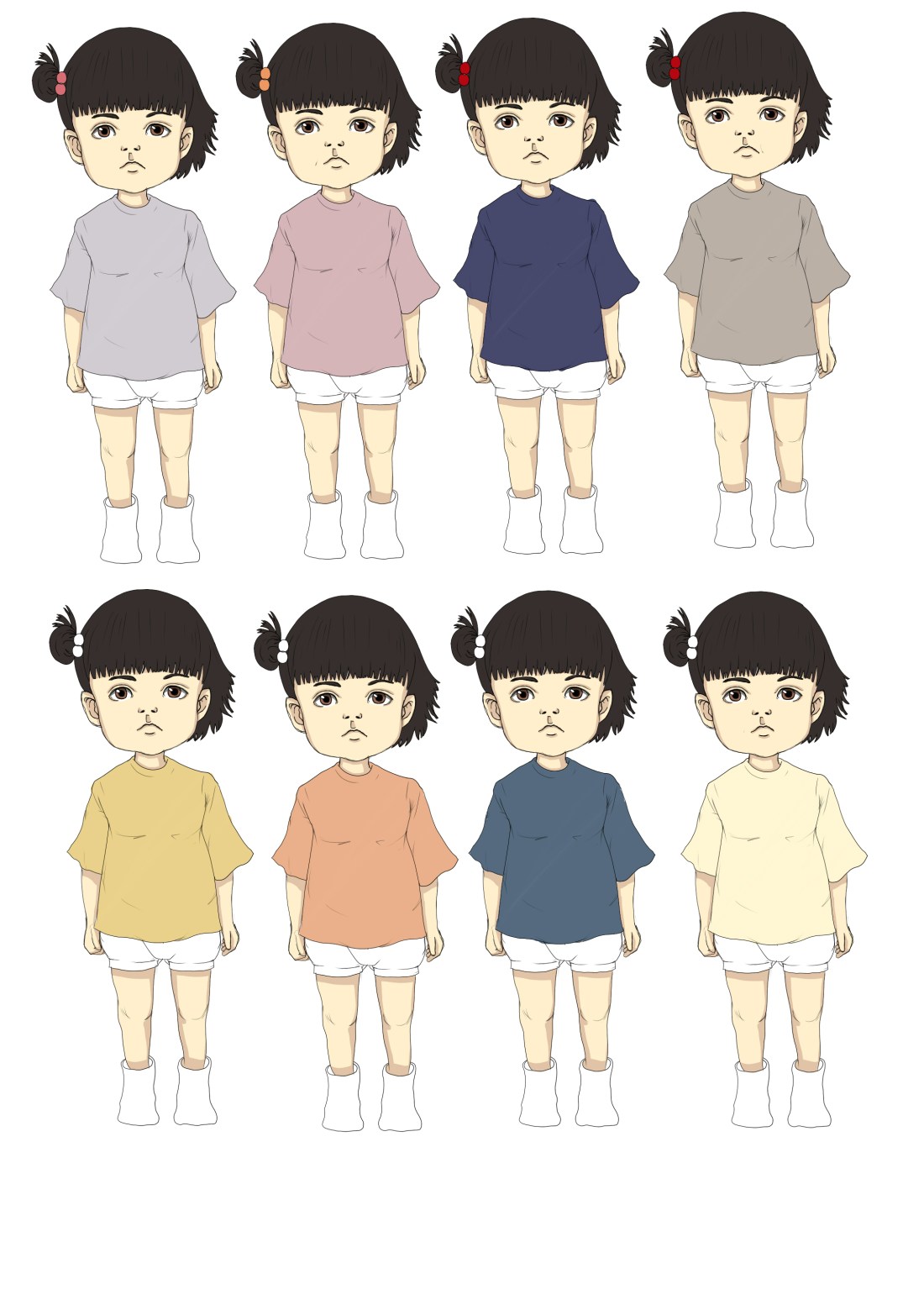
Author: cchanimation
27/09/2018 Fable Research
Ideas Day- The writers room
Creating and crafting your story
⦁ Short film that has a meaning/message
⦁ where are your ideas coming from?
⦁ Make your ideas well-rounded
⦁ Get in a creative head space
⦁ Recap bits and bobs of narrative theory
60 SECOND CHALLENGE
with Maddy Caulfield, Eddy King, Harry Botey, Harry Ashe
x2 CG Animators x2 Digital 2D Animators x1 Stop Motion Animator
⦁ ‘A Cage in search of a bird’ (Franz Kafka)
⦁ You have to simplify in a short film
⦁ A good short film:
⦁ Simple, economical, memorable
⦁ Ellipses: Leaving out what the audience can infer
⦁ character exists to play out a single moment
⦁ TIP: Start as close to the end as possible
⦁ The end is incredibly important, memorable
⦁ You don’t have to tie everything up in the ending
⦁ Open endings work well in short form stories.
⦁ Hermeneutic code- something unexplained that can only be answered through the story
⦁ When plotting the story ‘narrative works sideways’ (Jane Vandenburgh)
⦁ You have to start really open and really relaxed
⦁ ‘Do not try to think consciously. Drift,wait and obey’- Rudyard Kipling
⦁ Subconscious- Your creative self
Hypnotic game with Lynsey
What was inside my box? A large glass red heart, the rest was black and contained nothing else.
⦁ The ‘little bubble’ – ‘[when i write it’s in 3 dimensions- i imagine a character in a scene and it’s asif a little extends in front of me. The space of the scene is there.’
⦁ Animation write Jeffrey Scott- ‘If you can’t see your cartoon in your mind, chances are no one will see it when reading your script.’
⦁ Koch- ‘Everything in your imagination was first found somewhere else’.
⦁ The hippocampus- memory is such an important part of creativity.
⦁ The Latin verb ‘cogito’- to think
Answering as myself
⦁ I was born in Wales, in Cardiff city and more precisely Penarth Hospital.
⦁ The first bed I remember sleeping in was my small single person wooden bed covered in barbie stickers
⦁ I always wanted to be creative person
⦁ I used to enjoy getting into bed as a young child, switching on my fairy lights and getting into bed to watch a new animation on my T.V.
⦁ I’ll never forget memories with my family
⦁ I wish I had worked harder throughout my life
⦁ My favourite journey is travelling to Wales, especially going to the Valleys.
⦁ My voice is a lot higher pitched then I expected it to be
⦁ Yesterday I felt my brain was overloaded but in a good way.
YOU SHOULD BE ABLE TO ANSWER THE QUESTIONS AS YOUR CHARACTER
The Newcastle Personality Assessor. Rates a people against 5 factors:
⦁ Agreeableness
⦁ conscientiousness
⦁ openness
⦁ neuroticism
⦁ extroversion
Synecdoche: The part that stands for the whole
My Character ‘Selfie’
⦁ When my character walks through the door, she would potentially innocently stumble, fumble with her hands, smile and look around. Once she’s taken in her surroundings she will very quickly smile and confidently walk in.
⦁ If my character was to see a stray cat, she would run over, understanding quickly that this may frighten the cat, she would then approach softly, reaching out her hand in order to make contact.
⦁ My character is rather curious, always looking and attempting to understand a situation
⦁ Very confident, but can also be stubborn due to young age, for example: respects elders however if they do something which she sees as immoral she will likely cause a fuss.
⦁ For a young child who has to become independent rather quickly she stays positive.
Conventional story Structure
⦁ A modern fable: ‘Neighbours’ -LOVE YOUR NEIGHBOUR
⦁ Japanese storytelling tends to favour story causality above conflict (and character goals)
⦁ Kishotenketsu: This is a four part structure (especially common in Japanese horror)
Introduction- (ki)
Elaboration- (sho)
Twist- (Ten)
Conclusion
-The story of ‘The licked hand’
⦁ Japanese story structure and the idea of causality fits into the morality of my and not strongly based on a clear ‘moral story’.
08/10/2018-12/10/2018 Week 3
Research sources list:
No Sources.
Development
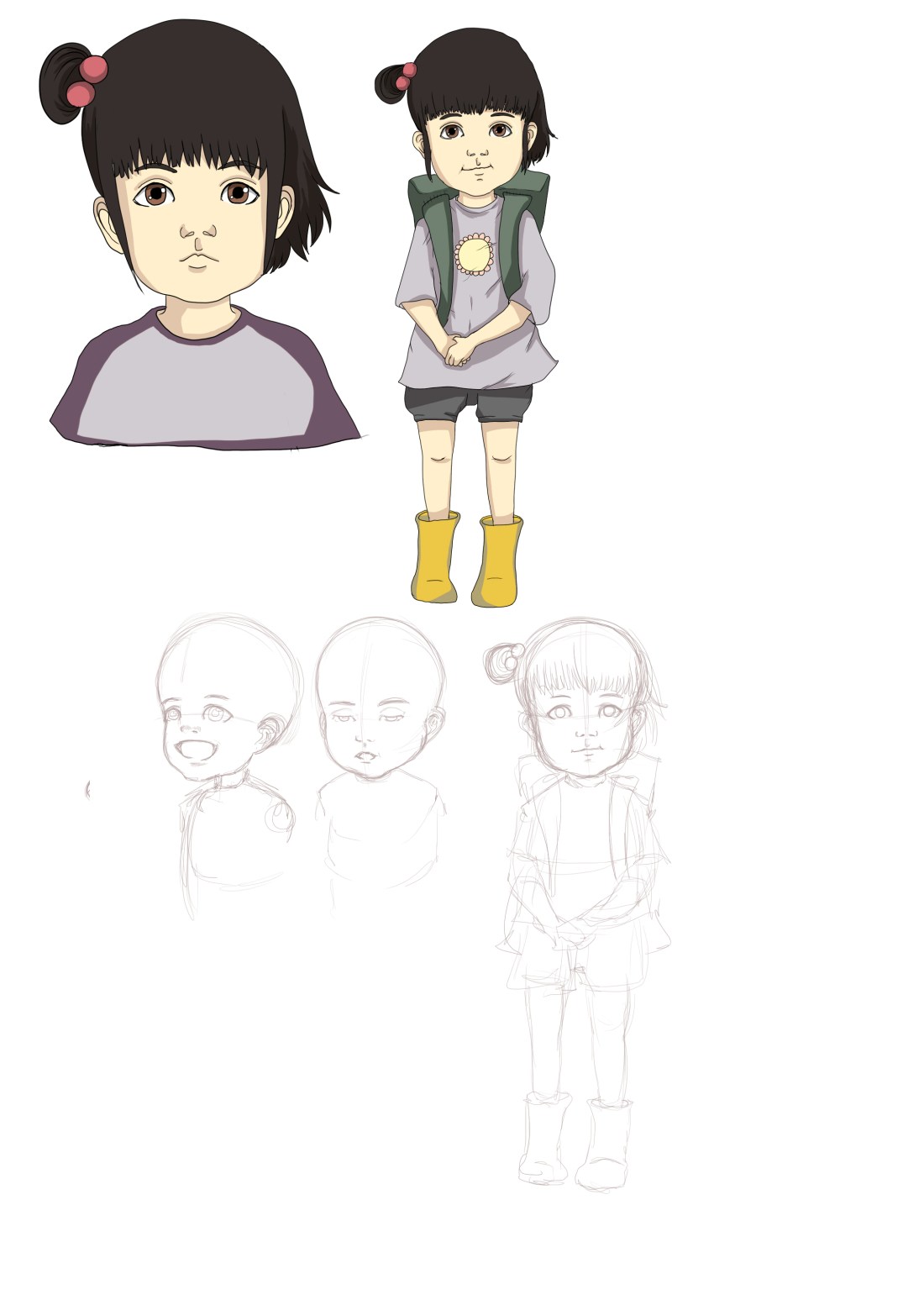
I’ve ended up redesigining my character quite a few more times than expected, I think this is because I want to make sure that my protagonist is portrayed as closely to how I envisioned her a possible. I didn’t want to end up animating or creating turn arounds before I felt i was completely happy with the appearance of my character. So having finally come up with a design I feel works to all the specific requirements (such as figuring out how I want her facial expressions to work, body size,overall structure and proportions of the character) I feel I can move onto other areas of my animation production. Co-side my redesigning I began work on my storyboards, I really enjoyed the creative freedom when considering each shot and scene.
Strengths
I have my first storyboard almost complete but I’m already aware that perhaps that the scenes are maybe too complicated for the time that I have, I would love to be able to fully render the entire animation but again this is unrealistic. I think my strengths which I’ve noticed throughout the years is being able to put myself in my characters shoes and create a storyboard with camera angles that work well with the emotion at the time. I’m excited to continue with this project and see what I’m able to come up with and how I will tackle certain animation challenges.
Areas for Development
Areas for development this week is to make sure I complete my storyboards and then relook at them and figure out if they are over complicated or I’m comfortable with the way I’m going about this project. However I will not just leave them how they are I will throughout next week again redevelop my story and see what ideas I come up with that work better.
Narrative Theory Recap
Narrative theory is fundamental within the story telling world, however you decide to go about developing and telling your story to an audience. I’ve decided to recap on some areas within narrative theory to remind me of components i can use in my own storytelling.
Todorov’s Equilibrium Theory believes that plots follow five key stages,
1. the Equilibrium stage, this gives the audience an idea of how the characters normal days are.
2. the Disruption stage this breaks the equilibrium and usually results in the characters coming to an understanding that something needs to be done about it.
3. Realisation Stage, the characters plan to do something about the disruption, usually putting the characters into a dangerous situation.
4. Restored Order Stage, the characters will attempt to restore the equilibrium
5. Equilibrium is restored.
Propps Fairytale Character Theory,
The Hero, usually the main character, defeat the villain and marry the princess
The Villain and the hero struggle conflict wise between one another
The Dispatcher, sends the hero on their quest
The Helper. Helps the hero on their quest
The Princess, A female character the hero is trying to resque or win over
The Donor, gives the Hero a magical object to help them on their quest.
The False Hero, someone at the beginning of the story which we are lead to believe wants to help the hero but turns out they are against them. ( A traitor)
Strouse’s Theory of Binary Opposition
 CCH-Animation Degree