Research sources List:
No Sources.
Development
This week I began to develop my storyboards as after my first attempt an animatic I started to realise that I had too many scenes and that my animation may run over by quite a bit. In order to resolve any issues that may come up later in the process I have recreated my storyboard knowing that now that I have a set plan that is less likely to run over the limit animating can commence. Although there are many scenes that I really thought would work beautifully in this piece I need to be practical as well as time conscious and make sure that the story itself doesn’t get lost or not clearly translated through to the audience due to not enough explanatory scenes.
Strengths
My strengths this week have been making sure that I remember to keep reminding myself of the time limit, my skills as an animator and what it is I’m hoping to achieve within this project. As I’ve previously stated Studio Ghibli’s animation style has been highly inspirational and I think that if I’m able to manage my time well I can develop my skills as a background artist at the same time so the final piece has the style and concept I’m working towards.
Areas for Development
My areas for development next week in order to move this project along further is to finish my storyboards and double check them to make sure they’re conveying the message of my fable to the best of their ability. I also need to start working on my presentation for Jon which I haven’t started yet due to changes I’ve been making on my storyboards and scenes. i think I will use the only website ‘Prezi’ in order to put something together for next week.
Category: Fable- Personal Showcase
Work and Research for the project ‘Fable’.
Character
Character like narrative, is such a crucial element to making a good story, the character is key to creating a connection with the audience. Miyazaki’s characters tend to be youthful, and good hearted by nature, I think this for a majority of people is something that is easy to empathise with. Whether it’s the desire to act more like these characters in our own lives, or because of their innocence we automatically want them to be ok and to watch their story. Of course the character can only express these traits well through a narrative crafted around them. For example, in ‘Laputa, castle in the sky’ Sheeta, the main young female protagonist is put into many scenarios and challenges in order for her to show us her true character. We can already gather from her initial introduction that she is a caring and soft spoken young girl, this is shown through her interaction with Potsu and the doves he cares for. But it’s when she is truly challenged when she reaches Laputa is where we as an audience fully understand who she is. I think although for some of Miyazakis film’s this is the case, a life and death scenario isn’t always necessary in order for a character to show their true traits and personality. But it could be said to have more of an impact. A film rather different to Laputa but still made by Studio Ghibli is ‘Kiki’s delivery service’, like any good story the narrative is constructed to show the character having to go through personal conflicts as well as other challenges. Kiki, who is the same age as Sheeta, are both similar in the sense that they are both kind, caring and good at heart, but due to their age and other limitations don’t always get things right. But this makes them human, and overall more endearing, no one wants to watch a movie or animation, or read a book where a character gets everything right all the time as this is simply not realistic. Miyazaki allows for negativity and for things to go wrong for these characters so that we can watch them deal with them and overcome them.
Design: Design for Studio Ghibli is something that they’ve made into what I would refer to as the iconic ‘Ghibli’ style, Miyazaki’s animations are constantly highlighted on their compelling story telling through the use of 2D animation. The team behind Studio Ghibli’s animations are incomparable to many other Japanese animation companies, in fact they are rather in contrast with one another. Nowadays a lot of anime companies are stretched when it comes to finances, the state of the economy and the ever growing market in consumerism. For example, many anime companies are having to resort to either recycling old animation (the same way Disney did), Lowering the overall quality of the animation (less frames per a second) Or having to stray away and leave out details in the anime in order to get the episode/series out in time (Gaps in the narrative and character development). Studio Ghibli don’t seem to ever be faced with this problem, so yes they may not be making anime episodes that need to be pumped out monthly in order to meet tight deadlines, but when they do work on an animation there is already a buzz of excitement from fans as there is already a high level of expectancy from a Studio Ghibli film. So how do they achieve this? Well from what I can gather is, a highly skilled team, and constant direction from Miyazaki. Once the narrative and characters are ready and designed, it’s time to work on the animation itself, A lot of the backgrounds are hand painted by artists working for Studio Ghibli, through constant painting, changes, direction, precision and of course skill, they are able to produce beautiful surreal worlds for the narrative to take place in. A beautiful visual which is fitting for a beautiful story. For me, studio Ghibli is a prime example of character, narrative, music and design working fluently together to form a masterpiece.
15/10/2018- 19/10/2018 Week 4
Research sources List:
Continuing character design by referencing images sourced via google on ‘Howls Moving Castle’ characters such as Markl.
Youtube: ‘Control Bear’. Inspiration for style and final piece.
Development
Since last week I have continued my development within my character design of my main heroine, especially in regards to colour and tone. I have also continued to reflect back on my references for animating as a whole and for my character such as ‘Howl’s Moving Castle’s’ Markl and ‘Control Bears’ overall style and visuals which have both been valuable reference materials. While working on this project It helps to put into perspective where I would like to be as an animator and the different roles and opportunities that are potentially available to me. I feel that my animating/drawing has definitely improved over the last 2 years and this has been something that has been exciting for me when developing this project.
Strengths
My strengths this week have been figuring out what sort of music I would like to have throughout my animation. I have come to the decision that I will have no speech in the animatin itself but background noises, noises created by my character and sub characters and perhaps small suggestive noises from the main heroine. Again this has been inspired by many short animations such as ‘Shelter’ and ‘Control Bear’.
Areas for Development
Next week although it may be something I’m perhaps putting off as I’m concerned about timing being an issue and if my animation will be dynamic enough is making sure i finish the storyboards and hopefully progress onto an animatic. If I’m able to start working on an animatic this will allow me to have complete understanding on timings for each scene and adding sound and music will be the next steps.
Areas for Development
Next week although it may be something I’m perhaps putting off as I’m concerned about timing being an issue and if my animation will be dynamic enough is making sure i finish the storyboards and hopefully progress onto an animatic. If I’m able to start working on an animatic this will allow me to have complete understanding on timings for each scene and adding sound and music will be the next steps.
Human beings and there desire for stories.
http://time.com/5043166/storytelling-evolution/
People need stories, even though we live in a world of vast social media, and sharing of information online, in a way I guess it’s like each individual is creating their own story online for others to see. As we tend to believe what we initially see of someone, for example, a photo, we forget to think rationally about why the persons uploaded this photo, what are they trying to show? I think many young generations including my own, and I would also say I’m guilty of this at times fall under the category of narcissism. Because when you come to think about it properly, what drives a human being to post updates about their life online, or vlog daily, is it a need to know people care? Do you need the self-gratification? Even if you’re not feeling great in real life it’s all abit better because the life you present online is always amazing? These new forms of storytelling I would consider impure and unhealthy, compared to fables that had meanings and messages that are passed down through generations to help teach humans how to treat one another etc. These quick self-satisfying and fake stories are what I feel are slowly driving young people slowly crazy. Yes, social media can be fun, it’s quick (everything nowadays seems to be about speed) and it means you can achieve alot of ‘socialising’ in a smaller amount of time. It also means you can get lost in the world of the internet, where you get sucked into everyone elses ‘lives’ that you forget to live your own for you and not just your posts.
I find it intriguing that in todays lectures, professors and lecturers are having to warn students about the dangers of social media and how this can take away so much valuable time from study. And to think that this was never ever an issue for my parent’s generation is something I’m not sure I will ever understand.
Human ‘s regardless of where it comes from or how it comes to us love to seek out and be given new information, I think the issue is the quality of stories that are somehow replacing ones that should be given more attention is where peoples brains turn a bit mushy. For example on the website above is a fascinating study on how stories have improved communities, ‘Camps with a greater proportion of skilled storytellers, were associated with increased levels of cooperation’.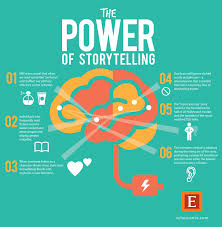

 CCH-Animation Degree